-
 English
-
 Español
-
 Português
-
 Русский
-
 Français
-
 日本語
日本語
-
 Deutsch
-
 Tiếng Việt
-
 Italiano
-
 Nederlands
-
 ไทย
ไทย
-
 Polski
-
 한국어
한국어
-
 Svenska
-
 Magyar
-
 Bahasa Melayu
-
 বাংলা
বাংলা
-
 Dansk
Dansk
-
 Suomi
Suomi
-
 हिन्दी
-
 Filipino
-
 Türkçe
-
 Gaeilge
-
 العربية
-
 Bahasa Indonesia
-
 Norsk
Norsk
-
 اردو
اردو
-
 Čeština
-
 Ελληνικά
-
 Українська
-
 Basa Jawa
-
 فارسی
فارسی
-
 தமிழ்
தமிழ்
-
 తెలుగు
-
 नेपाली
-
 မြန်မာ
-
 Български
-
 ລາວ
ລາວ
-
 Latina
-
 Қазақша
-
 Euskera
-
 Azərbaycan
-
 Slovenčina
-
 Македонски
-
 Lietuvių
-
 Eesti
Eesti
-
 Română
-
 Slovenščina


Home
>
News
>
Industry News
>
Revealing the working principle and advantages of high-power resistors
Revealing the working principle and advantages of high-power resistors
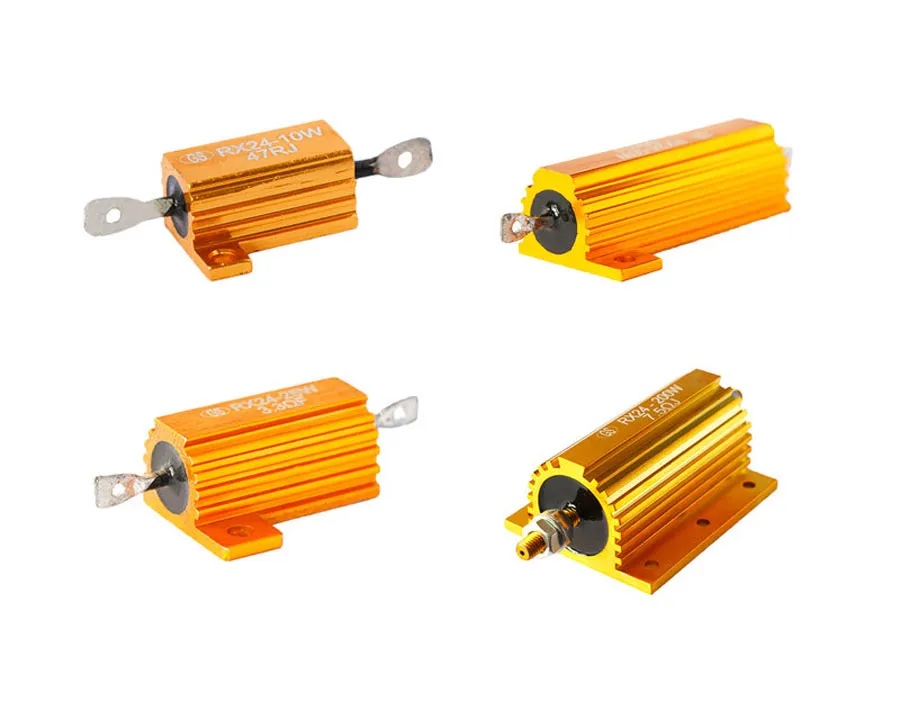
High-power resistors are frequently mentioned in electronic devices, but many people remain unfamiliar with their working principles and advantages. Imagine, without these small components, many modern devices might not function properly. High-power resistors are more than just simple components; they play a crucial role in circuits. Let's unveil their mysteries together.
What is a High-Power Resistor?
A high-power resistor, as the name suggests, is a resistor capable of handling high power. Its main function is to limit current, control voltage, and dissipate the heat generated by the current flowing through it. These resistors are commonly used in applications requiring high power handling capabilities, such as power amplifiers, frequency converters, and other high-power electronic devices.
How High-Power Resistors Work
So, how do high-power resistors work? Simply put, current flowing through a resistor generates heat. This process can be explained using Ohm's Law: the relationship between current (I) and voltage (V) is described by Ohm's Law (V = I × R). High-power resistors control the flow of current by selecting an appropriate resistance value, thereby achieving voltage stability.
This sounds simple, but designing high-power resistors actually requires considering numerous factors, such as material selection, heat dissipation, and voltage rating. Common materials include carbon film, metal film, and ceramics, and the thermal conductivity and resistivity of these materials significantly affect the resistor's performance.
Advantages of High-Power Resistors
High-power resistors offer a multitude of advantages. First, they can operate stably in high-temperature and high-current environments. This means that even under extreme conditions, equipment can still function normally, which is crucial for many industrial applications.
Second, high-power resistors have excellent heat dissipation capabilities. When current flows through them, excess heat is quickly dissipated, preventing malfunctions due to overheating. Imagine if electronic devices weren't properly cooled; they would be like constantly heating up in a closed room, eventually leading to an "explosion." High-power resistors are designed to prevent this.
Furthermore, high-power resistors have a wide range of applications in circuits. They can be used not only for current limiting but also for voltage distribution, signal attenuation, and other functions. Through proper design and configuration, high-power resistors can help us achieve more efficient circuit designs.
Application Areas
So, in which fields are high-power resistors mainly used? Actually, they are almost ubiquitous. In industrial control systems, such as motor drives and frequency converters, high-power resistors are an indispensable component. In the power electronics industry, such as power management and power conversion equipment, high-power resistors can improve system stability and efficiency.
Furthermore, high-power resistors also play a crucial role in audio equipment. For example, in audio systems, appropriate resistor configuration ensures clear and stable sound quality. Every time you enjoy music, the unsung high-power resistor is silently performing its function.
Selecting and Maintaining High-Power Resistors
Choosing the right high-power resistor is not a simple matter. We need to consider multiple factors such as power consumption, resistance value, and rated voltage. Imagine if you chose the wrong resistor; it's like putting a kitten in a tiger's cage—it could ultimately lead to a disaster.
In terms of maintenance, high-power resistors also require regular inspection. Although they are durable, it doesn't mean they won't age or break down. Regularly monitoring the resistor's performance to ensure it operates in good condition is key to extending the lifespan of the equipment.
summary
high-power resistors play a crucial role in electronic devices. From stabilizing current to providing thermal protection, they are vital in ensuring efficient operation. By understanding the working principles and advantages of high-power resistors, we can better design and maintain electronic circuits, improving device performance and reliability.
Therefore, the next time you see a high-power resistor, don't just think of it as a simple electronic component. They are the "unsung heroes" of circuits, silently contributing to technological advancement.